
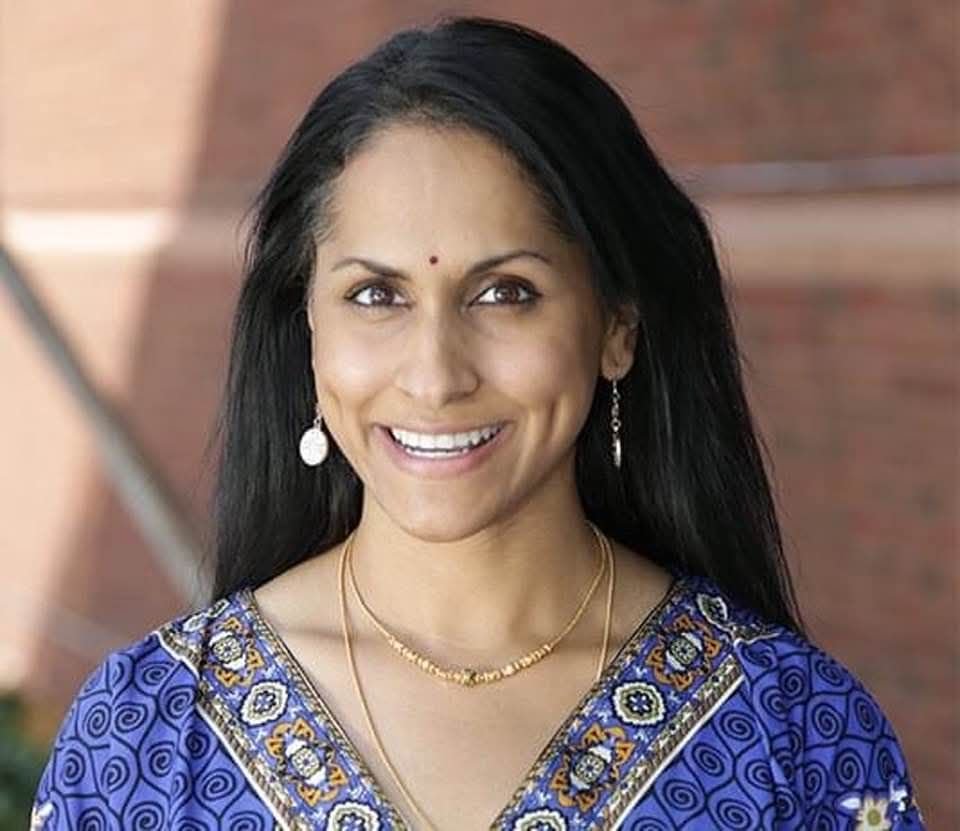
Dr. Rajni Shankar-Brown is an internationally recognized educator, scholar, dancing poet, artist, and activist whose work bridges creativity, healing, and justice. She serves as Professor, Poet, Artist, and the JBD Distinguished Chair of Social Justice Education at Stetson University, where she teaches courses on literacy, arts activism, and educational leadership.
She is the Founder and Executive Director of the Institute for Catalyzing Equity, Justice, and Social Change, Director of Education and Research for Housing Justice at the National Coalition for the Homeless, and an Advisory Board Member for Out of Hand Theater. Her leadership extends across multiple initiatives, including directing the Artivism Youth Academy and serving as Artist-in-Residence at the Museum of Art-DeLand. She is also a board member of Foundations to Freedom, a steering member of the National Environmental Justice Institute, and a longstanding partner of the United Nations.
An award-winning author and globally ranked spoken word poet known as “Rising Lotus,” Dr. Rajni centers poetry and the arts as transformative tools for social change, civic engagement, and collective healing. Her acclaimed collection Tuluminous has been widely celebrated for its luminous engagement with language as a force for healing, with proceeds supporting youth experiencing homelessness and arts integration. Alongside her creative work, she has published influential scholarly books and articles and led impactful initiatives at local, national, and international levels.
With more than three decades of creative practice and public service, Dr. Rajni is a cultural strategist, community organizer, and steadfast advocate for human and civil rights. She made history as the first woman of color elected President of the National Coalition for the Homeless, serving two consecutive terms, and previously held a leadership role with the U.S. Department of Housing and Urban Development, advancing equity-focused policy and cross-sector collaboration.
Across all her work, she remains deeply committed to healing-centered, arts-based approaches to education, equity, wellbeing, and systemic change—and, beyond her many roles, she is a devoted Amma who loves sunflowers and masala chai.